Posted in god sculpture

The Significance of Symbols on Buddhist Jewelry

It is considered that Buddhist jewelry gives the wearer a sense of liveliness, happiness and insight into one’s true nature. There is a wide variety of Buddhist jewelry each with its own uniqueness. Buddhist jewelry is usually made of silver and copper although in some cases gold is also used. The eight auspicious symbols of Buddhism, translated from the Sanskrit ‘Ashtamangala’, are very popular in Tibet and are used for Buddhist jewelry.

Buddha was mostly represented by the Eight-Spoked Wheel and the Bodhi Tree. Other signs were also used in representing him like Buddha’s Footprints, an Empty Throne, a Begging Bowl and a Lion.

The eight auspicious symbols are, however, the following: the Umbrella or parasol, the Golden Fish, the Treasure Vase, the Lotus, the Conch, the Endless Knot, the Victory Banner and the Dharma-Wheel (Dharmachackra). Each of the eight symbols represents one aspect of the teachings of Buddha. Let’s take a look at the significance of each symbol.

The Umbrella or Parasol

The parasol is said to cast a shadow of protection. Just a parasol casts a shadow to protect the bearer from the heat of the sun, the symbolic parasol casts a shadow that protects the bearer from the heat of spiritual suffering. In Tibet, the parasol is associated with royalty. It is a symbol of wealth.

Two Golden Fishes

The two golden fishes are usually depicted standing vertically on their tails with their heads curved toward each other. They represent the two great rivers of India, the Ganga and Yamuna. In Buddhism, these two fishes represent happiness because they have complete freedom in the water.

The Endless Knot

The endless knot represents a series of right angles and intertwined lines with no beginning and no end. It is often related to the endless wisdom of Buddha and is also significant for the interaction of opposing forces leading to their union and harmony in the universe.

The Lotus

As it grows, the lotus rises out of the mud at the bottom of the pond, passes through the water, and rises above the water to bloom. This shows how peace and serenity can be found in any type of environment. The water’s filth represents the evil present in the world.

The Victory Banner

This symbol stands for Buddha’s victory over the universe and his subsequent enlightenment.

The Conch

The conch is a symbol of power and authority. The shell is used as a horn in religious ceremonies to frighten away and banish evil spirits. It stands as a symbol of teachings of Buddha being spread to the world.

The Treasure Vase

The top of the treasure vase has been topped with a jewel symbolizing the fact that it contains treasure. The vase is said to have an endless supply of whatever is stored inside.

The Dharma Wheel

The wheel comes in three parts, the hub which stands for moral discipline, the spokes which are usually 8 in number representing the correct application of wisdom, and the rim which represents concentration.

For those who want to buy authentic Buddhist jewelry at competitive prices, the best way is to make the purchase online. There are many reputed online stores that offer a wide selection of Buddhist jewelry items at reasonable prices. Other than jewelry, they also offer Buddha statues , other religious sculptures, religious books, paintings and much more. 

Featured
Posted in god sculpture

The 7 Factors to Consider When Buying Buddha Sculptures

There are many different kinds of Buddha statues that you can choose from. However, before buying, you need to consider certain important factors that will help you in your buying process.

1. Understand why you actually want a Buddha sculpture or image?

Though different people buy the Buddha sculpture for different reasons, you must be clear with your thoughts and understand the reason behind why you actually want to buy it. The main reason behind buying a Buddha sculpture or statue is to achieve inner peace with the remembrance and understanding of the his lessons. Worshiping the sculpture will help you attain inner peace and relaxation.


Blessing Buddha

Therefore, what you want to achieve will ultimately determine the type of sculpture you need to buy. For instance, if you wish to experience a great and happy life, a laughing Buddha or happy Buddha statue will be the best one for you. On the other hand, a meditating Buddha figurine would be the right choice if you wish to tame your thoughts along with meditating methods.

2.  Always be very careful where you purchase your Buddha sculpture

You must be very careful while buying a Buddha sculpture and must find out where the sculpture is originally produced before buying. You can buy such sculptures from a reputable online dealer.

3.  Judgment regarding quality through observing the artistry of the face

Face and posture are the critical elements to look for when buying a Buddha sculpture. The quality of the sculpture can be determined by the face painting. Moreover, the posture is another thing you need to look for. Though it is not related to the quality observation, different postures have different significance. For instance, hands relaxing on the lap signifies meditation Buddha, again, the right hand touching the world symbolizes the enlightened Buddha.

You can also buy gold sculptures for your home or look for Buddha sculptures for sale online to create a better ambiance. 

4.  Always remember to look at the ears

The long ears of the sculpture signifies the genuine beauty of the artistic work. So, when buying a sculpture, don’t forget to check the long ears.

5.  Look into the designs on the body of the Buddha

The designs and carvings on the body talk about the quality of the sculpture. Look for some excellent designs by specialist artisans.

6.  Various types of Buddha figurines

Stating from the gold and vintage Buddha sculptures to the wood and copper statues, there is a wide variety to choose from. Select the one that can help you achieve inner peace and the one you think is suitable for you.

7.  Fill Buddha sculptures with mantras (Sacred Chanting)

It is believed that an unfilled Buddha figurine in your home can reduce the peace and well being. Therefore, it should be filled with mantra as it brings luck, tranquility and joy in your home.

You must try to follow the above mentioned factors when buying a Buddha sculpture to ensure peace and happiness.

Resource Box: The author of the article recommends Exotic India if you are looking for Buddha sculptures or wish to Buy Saraswati sculptures online () at best prices.

Posted in god sculpture, lord kali

Statue Art

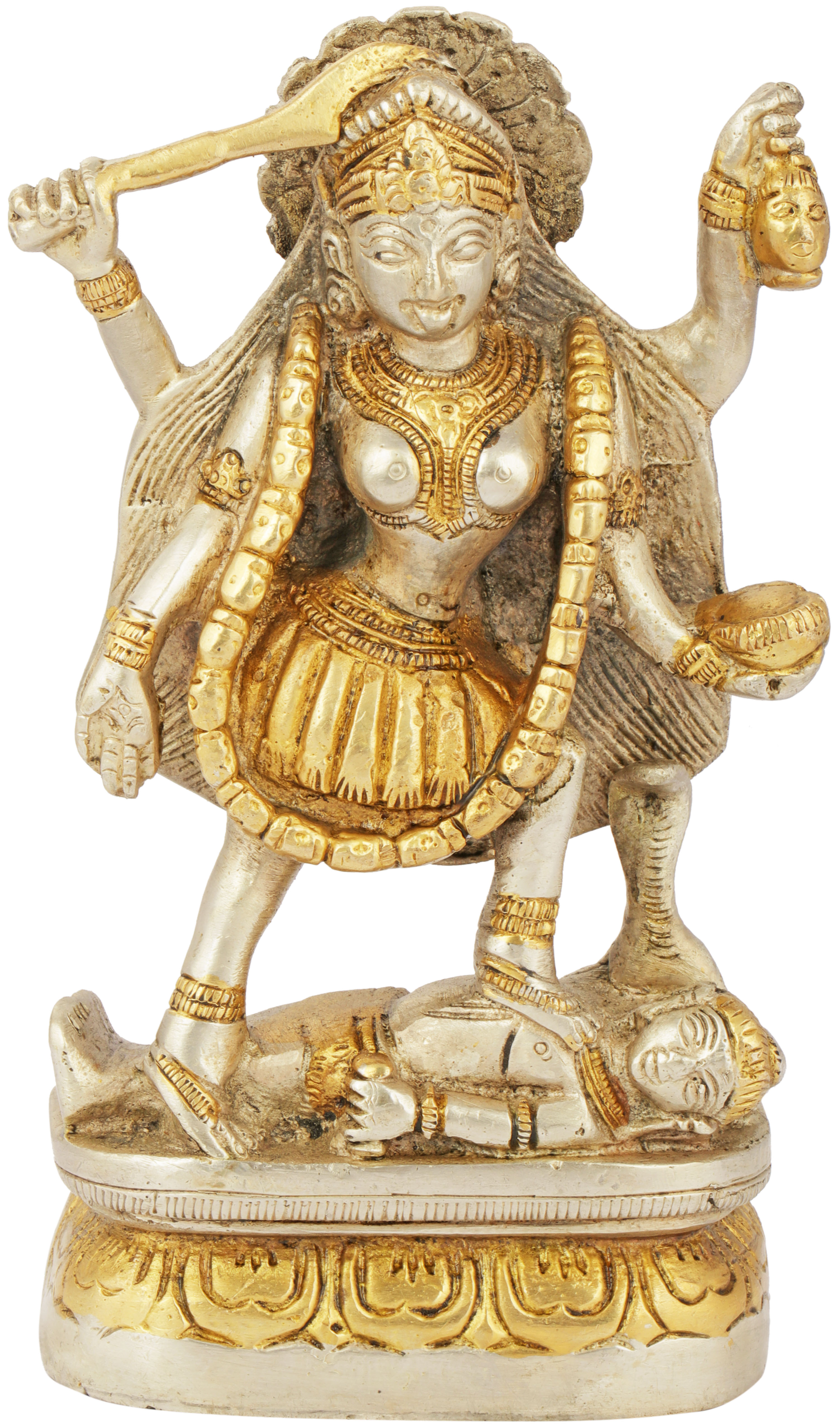
Statues of Kali are purchased for many different reasons. Some just want the statue in their homes to display on a mantle, others are given as gifts to friends. There are many sizes that can be purchased from small five inch statues to very large 27 inches high. Consider the space where the artwork will go before buying any one piece. If buying Kali as a gift, think about where the recipient may be placing the statue before buying one that is too large.


Goddess Kali https://www.exoticindiaart.com/product/sculptures/goddess-kali-ZDL49/

The kali artwork statues are made of polished or antiquated brass. They are situated in many different poses such as fighting or dancing. When a statue is purchased it is going to be a personal choice as to which one of the dozens available fits perfectly into its space. Every home that decides to display a kali statue is going to have a special spot to display the unique piece. Whether the one chosen is solid brass in color or has multiple colors incorporated in the design is going to be a personal choice for each buyer. In addition, each one is priced at different points so be sure to check on your budget before going overboard with an extravagant piece.

Before purchasing your very own kali, consider where the statue will be placed. If it is on the fireplace mantel or a dresser top remember that there should be space for the piece. Don’t over crowd your art or set it where it could get knocked over. Make a space that is specially designed for the kali statue, where you can enjoy looking at it, and where your guests are sure to ask where it came from. This is a piece that was designed especially for those that understands who this Hindu Goddess is.

The Hindu Goddess, Kali (http://www.exoticindiaart.com/sculptures/Brass/goddess/kali/) has been formed into a brass statue that can be bought for an affordable price and put in many different places. Find a special spot in your home or office to put the brass statue. The artwork will be something that guests will be asking questions and talking about all evening long. Don’t miss out on the special opportunity to have a unique piece of art for your home.

Posted in Uncategorized

Indian Sarees Online to Get the Best Deal

Buy Indian sarees online if you want to experience a revolution in the shopping experience. Online shopping is quick, easy and extremely convenient. It is also cost effective and ideal for those who want to conserve time and energy. It is currently possible to select from a vast range of colors and patterns to give women the chance to find a saree that suits them the best.

This is even more important if you are purchasing a saree for your wedding day. Every type of embroidery and beadwork is being used to give sarees the right flavor when it comes to style. Extensive stone work is also being used to make the saree look special.

Online stores offer Indian sarees in every imaginable shade possible. The biggest USP of buying an Indian saree online is you can place the order from anywhere in the world and get the most ethnic and exotic products that offer good value for your money. Online stores also enable you to access creations by top Indian designers.

Online (http://quartsoft.com/blog/201303/top-online-shopping-benefits) stores also provide custom tailored sarees for women with unique dimensions. Another advantage of these stores is that many of them offer free services such as adjustments to the sarees at no additional charge. Many such stores also sew cholis from the saree fabric and vary the width of this Indian outfit to suit a woman’s height and build.

The first point to take into consideration is that you need to purchase an Indian saree online (http://www.exoticindiaart.com/textiles/Saris/) that suits your complexion. Online stores offer a range of colors to suit every complexion from the marble white to the exotic dusky. Some rules of color selection do need to be followed however. Certain colors such as glowing red and peachy pink can suit women of any complexion. If you have pale, ivory skin, colors such as yellow, white and green will look stunning on you. Summer colors will suit women with dusky complexions and this includes pastel pinks and blues. Jewel tones can also look good.

Red haired women should avoid opting for scarlet shades as this can clash with the entire look. Women with olive complexions would do well to opt for earthy colors such as maroon, golden yellow and warm browns. Dark haired women can look stunning in colors such as burgundy and fuchsia. Saree and lehenga cholis (http://www.selfgrowth.com/articles/want-to-dress-up-like-a-queen-try-a-designer-lehenga-choli-this-time) can flatter any type of body build and make women look elegant and graceful. But slim women should restrict themselves to fabrics such as cotton, tussar silk tissue and organza rather than synthetic clinging materials to exude a more curvaceous look.

Chiffon and georgette are also good option. Sheer sarees (http://blog.fashionandyou.com/how-to-drape-a-saree-in-10-easy-steps/) with lace and net work on them can also be the top choice for svelte and elegant women. Shorter women or those with more generous curves would do well to avoid over embellished borders, bold prints and too many color contrasts. Monochromatic patterns such as silk, chiffon or Georgette can make a woman of this build look extremely attractive. You can pull off a net saree with a well tailored blouse or choli. Accessorizing an Indian saree with Indian gold jewelry (http://www.exoticindiaart.com/) will spruce up the looks of the attire and your personality.

Posted in Uncategorized

The Finer Points To Consider When Looking To Buy Buddha Statues Online

The great sage Siddhartha Gautama, better known to the world simply as the Buddha, lived nearly 2,500 years ago. It is incredible to think that even after all these millennia the name Buddha still evokes the ideas of peace, serenity, universal love and simplicity. One of the main reasons for this is probably the various forms of Buddhist art that have survived into our times. They flourished and evolved across the ages as the teachings of Buddhism spread from India to the rest of the world, especially parts of Asia. Buddhist sculpture is perhaps its most prominent branch, one that is universally recognized across the world.

We have all seen Buddhist statues somewhere or the other. In different media, at religious centers, historic landmarks and most significantly in people’s homes. There is a phenomenal demand for Buddhist statues. People buy statues of Buddha for different reasons. Some buy them for the obvious religious significance. Others might buy them more from spiritual perspective, for meditation and all. Then there are the vast majority of people who are on the lookout for that perfect Buddha statue for their home or garden just for aesthetic reasons. With the rise in popularity of the eastern philosophy of Feng Shui, there are still more people looking for a suitable Buddha statue to usher in the right kind of positive energy in their homes and lives.

Beginners looking to buy Buddha statues online can find a wide variety of choices. In fact, the diversity of choices when it comes to Buddha statues in terms of size, region of origin and art style can actually confuse and confound the novice buyer. There are different postures and hand gestures of Buddha commonly depicted in statues and each of these has unique meanings and symbolism. Other than statues of the Buddha himself, once can also find other Buddhism related statues online. There is also wide variety of choice of materials, ranging from tone, ceramic, brass, mosaic, copper, porcelain and many more.

A very common and broad distinction that can be made on Buddha statues available for sale is based on whether they are intended for placement indoors or outdoors. Placing Buddha statues in gardens outside homes is an age old tradition. For this purpose, the more serene, meditating Buddha statues are chosen. It is always advisable to learn a bit more about Buddhist practices and customs before one decides to buy Buddha statues online with the intention of placing them in the garden. It is always nice to avoid causing offence to other people’s religious beliefs. Faux pas like placing Buddha statue on bare ground can be considered offensive.

 People commonly buy Buddha statues online (http://www.exoticindiaart.com/sculptures/Buddhist/) to place in the indoors in a specific corner of the house or a separate room. The placement of the statue is often based on Feng Shui principles as well. There are rules governing placement of Buddha statues. They should always be placed on a pedestal or table and never on the ground. Ideally, no other object or furniture should tower above your Buddha statue or cast a shadow on it. Also never ever place your Buddha near a kitchen or toilet. That is a deeply offensive thing to do! Buddha statues can be found in different poses like the reclining Buddha, Earth touching Buddha, medicine Buddha, protection Buddha etc. Read up a bit about each of these poses and styles before making a final decision on your purchase for best results.    

Posted in Uncategorized

Here is Why You Should Gift Ganesha Idols

India a diverse country but predominantly Hindu, as far as religious orientation is concerned. The Hindus are devout followers of their faith and believe in idol worship. If you visit a Hindu household, you will always find idols of their deities adorning the walls and sculptures gracing a small makeshift temple. It is their deep faith that has personified gods for all these centuries.

Having said that, Hindu idols are not just limited to temples for worship, but also make up an important part of home decor. You will often find Hindu art [http://www.exoticindiaart.com/] in people’s homes, most common being the idol of Lord Ganesha.

Many people who do not belong to the Indian culture often look at the elephant god with curious eyes. Since they don’t know the history, they cannot tell the significance of this god in Hindu art

.

Indian culture is very interesting and has a very strong faith based logic behind every lord they worship. The same goes for the elephant god, or as Hindus call him, Lord Ganesha. The elephant headed god is often represented with multiple hands and a mouse as his carrier. While kids love his funny looks, adults in the house preach the lord for his divine powers. Lord Ganesha is so popular among Hindus that his idols and paintings make the most important gift during festivals and special occasions.

People of Hindu faith believe that by pious presence of Lord Ganesha, their homes and lives will stay protected from all the obstructions and ill-intentions. People often pray to Lord Ganesha before they are starting something new in their lives. It is believed that Ganesha helps his followers by blessing them with prosperity and good fortune.

The idol of the lord is often placed in front entrance of the house to protect their homes from evil energies and wrong people from entering. It is also an endearing way to greet the visitors with the blessings of Lord Ganesha.

Since so many people gift Lord Ganesha’s idols to their close friends and family, there are many types of high quality statues you can find that make up a beautiful and a thoughtful gift. You can check out the Indian handicrafts online store to buy these idols or shop around in your local market to get the best looking idols for gifts. Some sellers may also offer delivery and gift packing options to its customers.

If you have a friend who is starting new life or a family member about to embark on a new journey, you give them a Ganesha idol and wish them success for their future endeavors. With the lord’s powerful blessings, your close friends and family members will attain prosperity.

Posted in Uncategorized

The Confident Gaze Of The Enchantress

It is to the patronage of the young King Swati Tirunal, followed by the arduous efforts of art poet laureate Vallatol, that mohiniattam was preserved as the only solo dance form among India’s classical dances. It originated in the temples of Kerala, wherein female dancers assisted in temple ritual by adding gestures to the chants of the priests. This evolved into a dance form that is markedly expressive and feminine. Such is the doll that you see on this page, a classical mohiniattma dancer who enchants onlookers with the seductive beauty of her skill. Indeed, the word ‘mohiniattam’ translates to ‘the dance of the seductress’, and this exotic doll has all the characteristics of the celestial mohiniattam dancer.

Celestial, because it is said that Lord Vishnu Himself had transformed into a woman of exceeding beauty in His quest to play with the minds of the asuras. This happened in connection with both the samudramanthan and the Bhasmasuravadh episodes. This lifelike doll captures the grace of mohiniattam to perfection. Beneath the signature cream-coloured gold-bordered silk drape are a pair of long legs caught amidst dexterous motion. Her delicately moulded hands are arranged in the hamsaysa and the ardhachandra mudras. Her gold shringar complements her pristine complexion to perfection. From her lifelike, skilfully made-up face to the stance of her lissome roopa, this doll on a shelf would add dynamicism to your space.

Posted in Uncategorized

Living the Full Life: 50 Instructions from the Mahabharata

Bhishma undoubtedly is one of the central figures of the Mahabharata. When he was at his deathbed after the great war, his grandson and would-be king Yuddhishthira approached and asked him numerous questions encompassing all aspects of life. The dialogue between the two is one of the highlights of the Mahabharata and the instructions imparted by Bhishma give us an immense opportunity to lead better and more fulfilled lives ourselves. One particular part of the conversation highlights how we can lead a fuller, longer and relevant life. This dialogue runs as follows:

Yuddhishthira: “O Grandfather! The Vedas clearly stipulate that a man has a life of 100 years. If this is the case, why does a man often die before completing his full life-span? Also, tell me how does one obtain fame in this life? How does one obtain prosperity?”

Bhishma replied: “I will now answer what you have asked. It is good conduct (achar) that ensures a long lifespan. Prosperity and fame are also obtained through good conduct only. The one who takes recourse to good conduct, even if his whole body be sinful, removes anything that is inauspicious. Actually, the sign (lakshana) of dharma is good conduct only. Now I will enumerate the rules of conduct which lead to a reduction in one’s lifespan:

1). Those who are nastikas (non-believers in the Vedas), those who do not do anything (nishkriya), those who go against the word of the shastras or the guru, all these have their lifespan reduced.

2). One should never be stubborn against one’s guru. If the guru is unhappy with us we should make all efforts to please him. There is no doubt that criticizing the guru burns down a man’s age.

3). The one who crushes mounds of earth, uproots grass, bites his nails, eats food tasted by others and is restless, such a person does not obtain a long life.

4). A person must wake up at at brahma-muhuruta (roughly one-and-a-half hour before sunrise), and ruminate over his dharma and artha. Then he should get up from his bed, have his bath etc. and then with folded hands perform his morning sandhya, facing the east. In the same way, the evening sandhya should also be performed facing the west, it being imperative that no conversation should be made with others during the two sandhyas. The rishis of yore gained a long life only by performing the two sandhyas. Therefore, restraining speech at that time, one must respectively face the east (morning sandhya) and west (evening sandhya) daily. Those twice-born who do not perform the two sandhyas follow adharma.https://www.exoticindiaart.com/article/dharma-in-mahabharata/

5). One should never look at either the rising sun or the setting sun. Nor look at the sun during an eclipse or at the middle of the day.

6). Whatever be one’s varna, one should never have intercourse with another person’s wife. For a man, there is nothing which shortens a lifespan as much as having intercourse with another person’s wife.

7). Dressing one’s hair, applying kajal to the eyes, brushing the teeth and doing puja to gods, all these should be done only before noon.

8). One must never look at urine or excrement. One must not speak when passing urine. We should never do these two functions in water or in a cowshed. One should never pass urine while standing.

If a person passes urine or excrement facing the sun, fire, a cow, a brahmin or alongside a road, then his lifespan is destroyed. Also, after performing these functions, one must wash one’s feet.

9). One should not venture out too early in the morning, too late in the evening or when it is exactly afternoon. One should never travel with someone unknown nor should one travel alone. One should never set out without worshipping the gods first.

10). One must not speak while eating. One should not criticize the food one is having. For a long lifespan, one should face east while eating food; for fame south and for wealth west. Having finished eating one should mentally touch fire.

One should eat only while sitting and never standing or walking around. One must wash one’s feet before eating food (i.e. one should eat with one’s feet wet). But one should not go to sleep with wet feet. The person who washes his feet before eating lives for a hundred years. In addition, one should not eat food cooked by a woman having her monthly periods.

One should not eat food without sharing with someone who is looking at it intently.

11). Three things are personification of energy – fire, cow and brahmin. They should never be touched with a hand that has not been washed after eating. If one follows this precept, one’s lifespan is not diminished.

12). One must never look at the following three objects when one is impure – the sun, the moon and the nakshatras.

13). When an elder person arrives, a young person’s prana ascends upward (thus threatening his life). By standing up and greeting the elder person, the young person is able to regain his prana. After greeting the elder person, a seat must be offered to him. When he is seated, the young one must remain standing. When the aged person walks, one must must follow behind him, i.e. the younger person should not walk ahead of an older person.

14). One should never sit on a broken seat, nor ever use a broken brass vessel.

15). One must never eat while clad in a single garment, i.e. the upper garment would also be worn.

16). One should never bathe naked, nor should one sleep naked. One should never bathe in the night.

17). One should not eat food that has been eaten by another person (i.e. one should not share one’s plate of food with any other person).

18). One should never touch the head (one’s own or any other person’s) with impure hands because all the pranas are concentrated there only. While bathing do not pour water again and again on your head. Then the lifespan will not be reduced.

19). After taking a bath one should not apply oil to one’s limbs (i.e. oil massage is prohibited after bath).

20). One should never study in an impure state.

21). A person who desires to live long should never irritate the following three, even though they may be weak: a brahmin, a kshatriya or a snake. All three all extremely poisonous. Therefore, a wise person makes efforts to be at peace with all the three.

22). Those who, violating the ordinances of dharma, indulge in physical relations with women of a different varna than their own, their lifespan is shortened and they go to hell.

23). One must give way to the following: a brahmin, cattle, the king, old people, those carrying a weight, pregnant women and those who are weak.

24). One must never footwear or clothes worn by others.

25). One must not indulge in physical relations with one’s wife on the following days: purnima (full moon), amavasya (no moon), ashtami (eighth day when moon is exactly half) chaturdashi (one day before full moon and also before no moon), and on all festivals and days of fasting (parva).

26). One must not pointlessly eat meat (i.e. one should only eat meat offered in sacrifices).

27). One should not utter cruel words that make another person feel inferior. One should not agitate others with our words. If a forest is cut down with an axe it grows again; but wounds caused by harsh words are never healed.

28). One must shun company of people who criticize the Vedas or slander the gods.

29). One should never hit another person with a rod; however, one can hit one’s own son or disciple, but that too only for instruction purposes.

30). Sweets like kheer or halwa should never be cooked for one’s own self; they should always be offered to the gods first.

31). One should not be in bed when the sun rises. If this happens, one must atone for it (prayashchitta). After waking, one must greet one’s mother, father and other seniors. This is the way to attain greatness. Also, sleeping during the day reduces one’s lifespan.

32). One must always eat according to the instructions of the shastras and fast on auspicious occasions.

33). One should never have physical relations with an unknown woman or a pregnant one.

34). One should not lie on a bed diagonally.

35). One should never wear wet clothes. One should never wear a garland of red flowers. The learned person uses white flowers.

36). One must wear a different garment when one goes to bed; a different garment for going outside and a different garment when worshipping the gods. Otherwise, the gods are dishonored.

37). A learned person should not lick salt out of his hands.

38). One should never eat curd in the night.

39). One must eat once in the morning and once in the evening, and avoid eating in between. One must not talk while eating. One should not eat without being seated.

40). One should not have physical relations with a woman during the day. Nor with a woman who has not bathed.

41). One should not be intimate with doctors, children, the elderly and servants.

42). If a wise person desires his benefit, he must live in a house constructed in consultation with architects and brahmins expert in the science of Vastu.

43). One should not sleep during the two sandhyas nor study during them. An intelligent person does not eat during the period of the two sandhyas. This is the way to obtain greatness.

44). Shraddha (ancestral rites) should not be performed at night.

45). One should not eat in excess at night.

46). One should never marry a woman from the same gotra.

47). Jealousy reduces one’s lifespan, hence jealousy must be avoided.

48). One must not injure women and always protect one’s wife.

49). One must have a bath after shaving or having one’s hair cut off.

50). One must not do namaskar to the gods, brahmins or one’s guru in an unbathed state.

51). If we are traveling, one must find shelter inside a house before the western (evening) sandhya arrives.

52). One must follow the commands of one’s mother, father and guru, without thinking whether their instructions are desirable or not.

53). One should always hear the puranas , itihasas and the conduct of great-souled people.”